Fabric Notes · 2026.05 · 24 min read
The Cult of the Crumple
Linen is not a seasonal cliché but a structural language: from cellulose crystallinity and retting biology to pressing physics, mill ecology, and cultural codes of sprezzatura.
Share / 分享
Ready
Notes on Linen at the Highest Register of Menswear
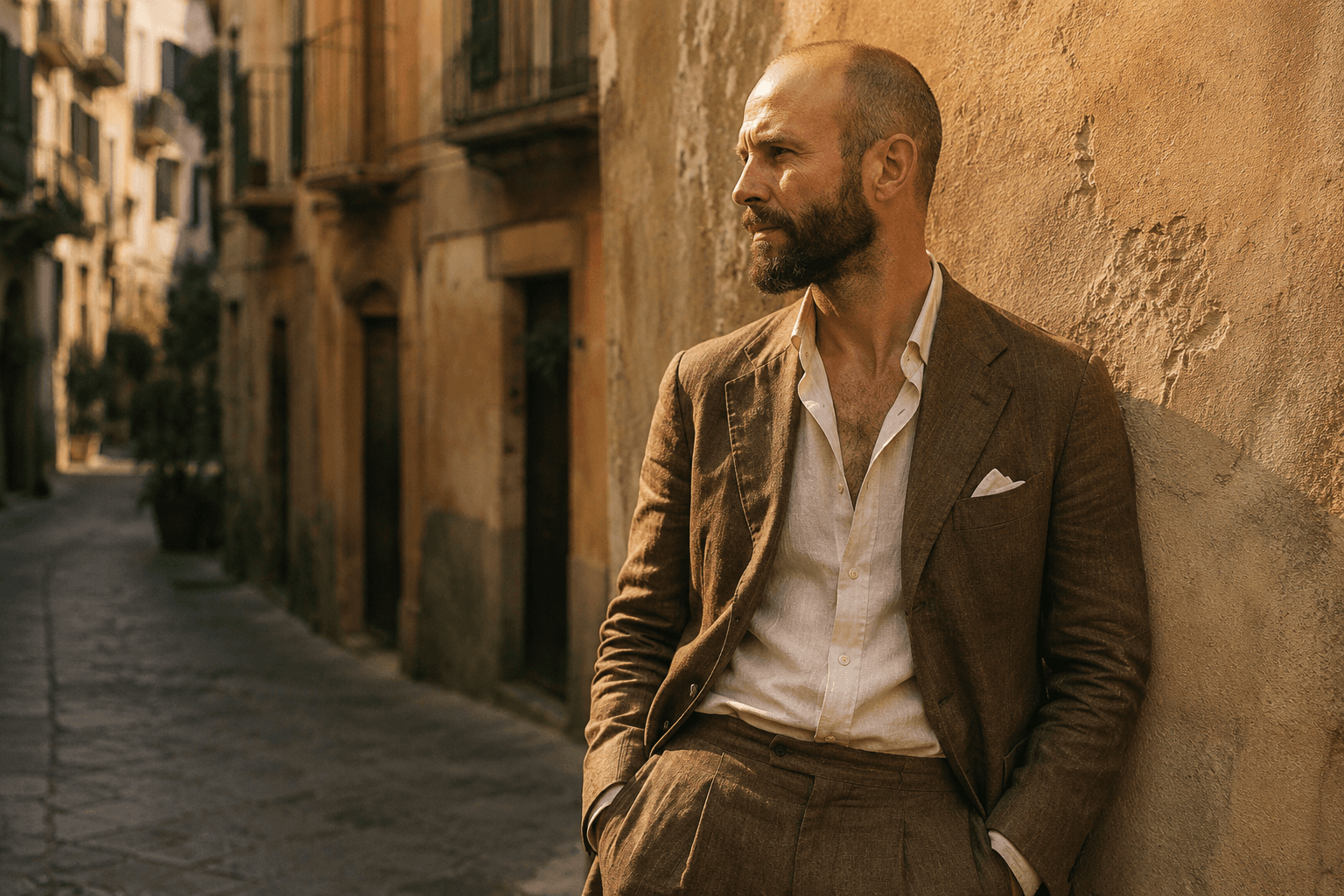
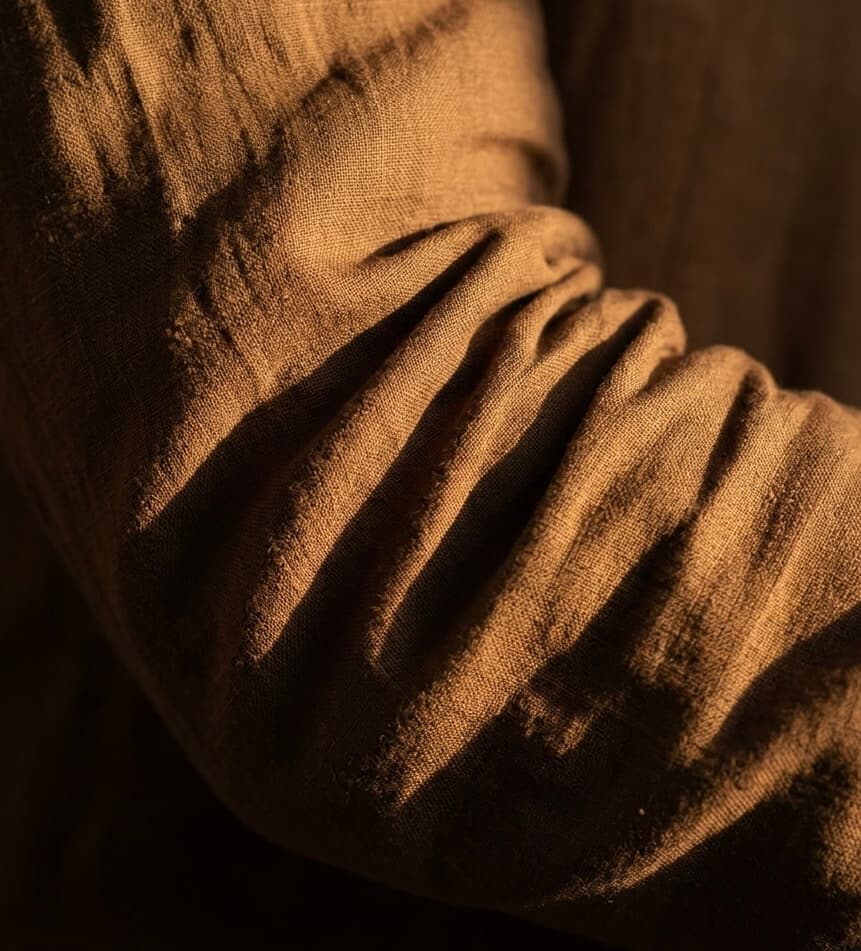
The wrinkle in your linen shirt is not, despite what your dry cleaner is too polite to say, a defect. It is a signature — a physical confession of how the cloth was grown, retted, spun, woven, and worn. And among the small fraternity of men who order their clothes from a tailor with a tape measure draped around his neck, the wrinkle has become something close to a creed.
This is, I should warn you, a piece written in defence of a fabric most people have already decided they understand. Linen, they will say, is for summer. Linen, they will add, is for men of a certain age in Cap-Ferrat. Linen, finally, is what you wear when you have decided to look like you have just slept in a deck chair. All of which is half-right, and therefore mostly wrong.
What follows is a long essay on what linen actually is — at the level of the cellulose molecule, at the level of the Belgian flax field, at the level of the Neapolitan tailor's pressing iron, and at the level of the dinner-party anecdote. By the end you will know why a great linen suit is more difficult to make than a great worsted, why an Irish linen jacket can keep you warm in October, why lingerie and lining share a root, why Gianni Agnelli wore his watch over his cuff, and why a Neapolitan count once threw out a dozen handmade suits at the end of every summer without a second thought.
If you are buying linen, commissioning it, or selling it, the difference between the cheap stuff and the apex stuff is not, as the trade likes to pretend, "thread count." It is everything below.
What the Wrinkle Is, At the Molecular Level
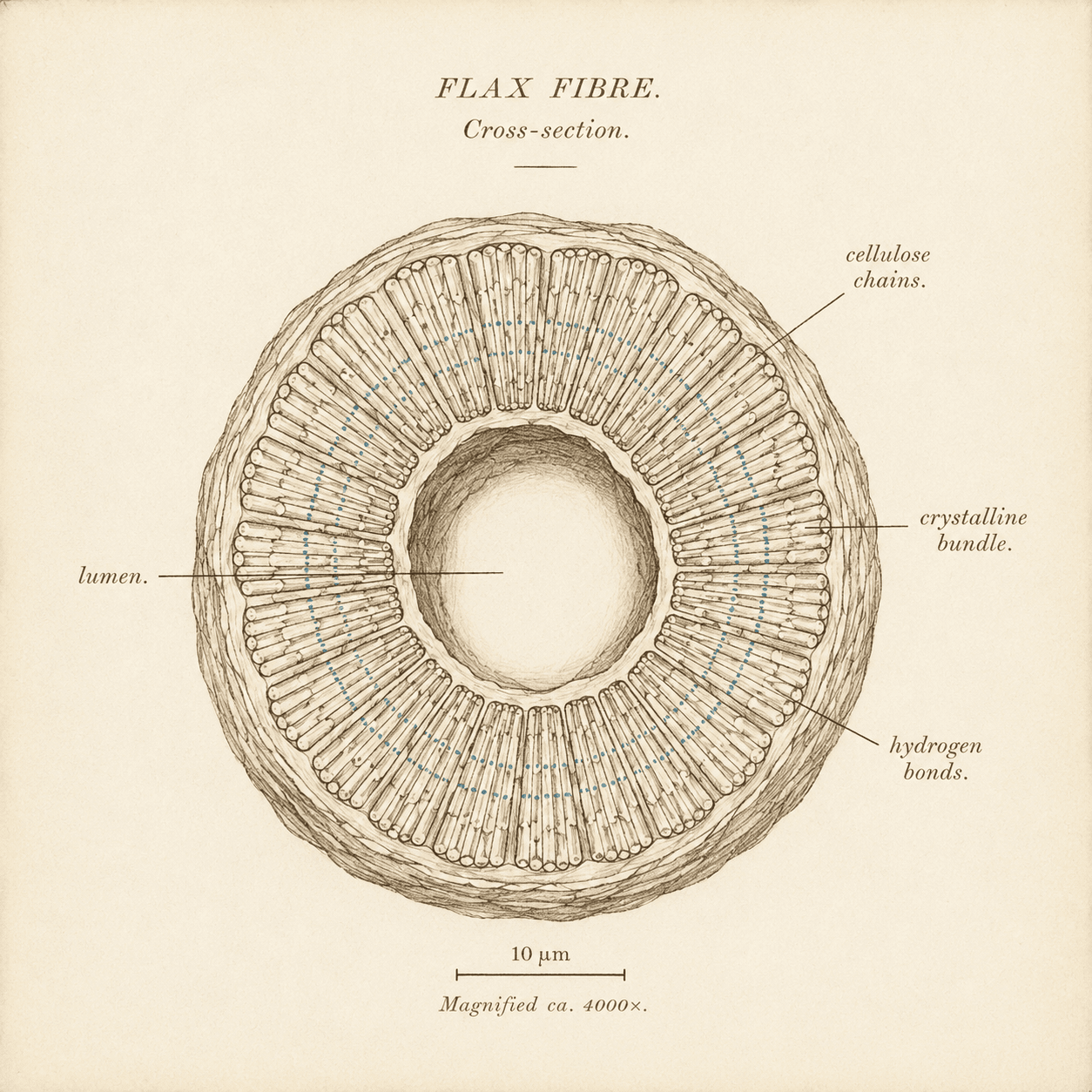
Linen is bast fibre, extracted from the inner stem of Linum usitatissimum — the flax plant, cultivated for textiles in Europe since the Neolithic. Roughly seventy percent of the resulting fibre is pure cellulose, and that cellulose is unusually well-organised. Its crystallinity — the proportion of molecular chains stacked in perfectly regular order — sits at around seventy percent, which is exceptionally high for a natural fibre and which gives linen its astonishing tensile strength, between 345 and 1500 MPa depending on how it has been processed. Wet, it is stronger than dry. (This is the inverse of cotton, and one of the small facts that converts skeptics.)
The price you pay for that crystalline order is elasticity. Linen will not stretch. Its elongation at break is below two percent — meaning the fibre snaps long before it bends. When you sit down in a linen jacket, the cloth across your back has to go somewhere. Lacking the springy disulfide bonds that allow wool to recover its shape, the cellulose chains simply slide past each other and lock into their new position.
The mechanism for that locking is hydrogen bonding. Ambient moisture — from the air, from your perspiration, from a light dew on the morning fabric — penetrates the fibre and dissolves the existing hydrogen bonds. The chains move. The water evaporates. New hydrogen bonds form along the line of the fold. Those new bonds, contrary to what most people assume, are not weak. They are, on the contrary, very stubborn. Which is why your linen will not "shake out" overnight the way silk will, and why ironing it requires more technique than you might suspect.
This is the first thing to understand: the wrinkle is not the fabric failing. It is the fabric being exactly itself, a record of the body that wore it written in molecular ink.
The Counter-Seasonal Heresy
Now an unpopular position: linen is not a summer fabric. Or rather, it is not only a summer fabric, and the men who believe otherwise have never handled a 400-gram bolt of Irish linen.
Inside each linen fibre is a microscopic hollow channel called the lumen. In the summer, when you wear an open-weave Italian linen at 200 grams a metre, that lumen acts as an evaporative chimney: it wicks moisture away from the skin and dumps it into the surrounding air. Linen will absorb up to twenty percent of its own weight in water before it feels damp to the touch, which is why a linen shirt on a hot day in Rome feels dry when a cotton oxford would already be sticking to your back.
But that same lumen, in a tightly woven 380 or 410-gram Irish linen, traps still air — and still air is one of the best insulators known to apparel. A heavy Spence Bryson Tyrone, cut as a sport coat over a heavier shirt, will keep you perfectly warm well into October. The cloth has the kind of insulating microstructure that engineers attempt, with limited success, to mimic in technical outerwear. Kapok fibre, for comparison, has an even larger lumen — eighty to ninety percent — but its tensile strength is between 3 and 8 MPa. It can insulate, but it cannot survive. Linen is the only natural fibre that delivers both at the apparel scale.
There is no real reason, in other words, to put your linen jackets away in September. The Neapolitans never have.
The Etymology of Intimacy
There is a small but illuminating linguistic detail that almost no one notices. The word lingerie comes from the French linge, which means linen. The word lining, in tailoring, descends from the same root: originally the linen panel sewn against the skin inside an outer garment. So does linseed, the seed of the flax plant — and linoleum, originally an oiled linen floor covering invented in 1855. When the English language reaches for a word that suggests softness, intimacy, the layer that touches the body, it reaches, almost unconsciously, for linen.
This is not coincidence. From the Pre-Dynastic Badarian culture of Egypt around 4400 BC, through Roman antiquity, and all the way to the late nineteenth century, linen was the universal undergarment of the Western world. The Romans wore the sublicula — a short linen undergarment — beneath the toga; medieval and Renaissance Europeans wore the chemise or shift beneath their wool. Bathing was rare. Wool was scratchy and held smell. Linen, which absorbed sweat, washed easily, and dried bright, was the layer that took the brunt of the body and was changed daily. "Wearing your linen" — that is, changing your linen shirt — was, until well into the nineteenth century, the central act of personal hygiene for any gentleman with the household staff to launder it.
This is the part of linen's history that the contemporary man, buying his linen suit at a beach boutique in Forte dei Marmi, has almost completely forgotten: that for several thousand years, linen was the most intimate possible fabric, the thing that lived against the body when everything else was a layer of class display. The Egyptians wrapped their dead in it for the same reason they wrapped themselves in it while alive. It was, and remains, the cloth of the skin.
The Linen Shirt, and Why It Is the Real Test
If the suit is where linen makes its theatrical entrance, the shirt is where it does its serious work. And it is the linen shirt — not the linen suit — that is, in my view, the more accurate test of whether a man understands the fabric.
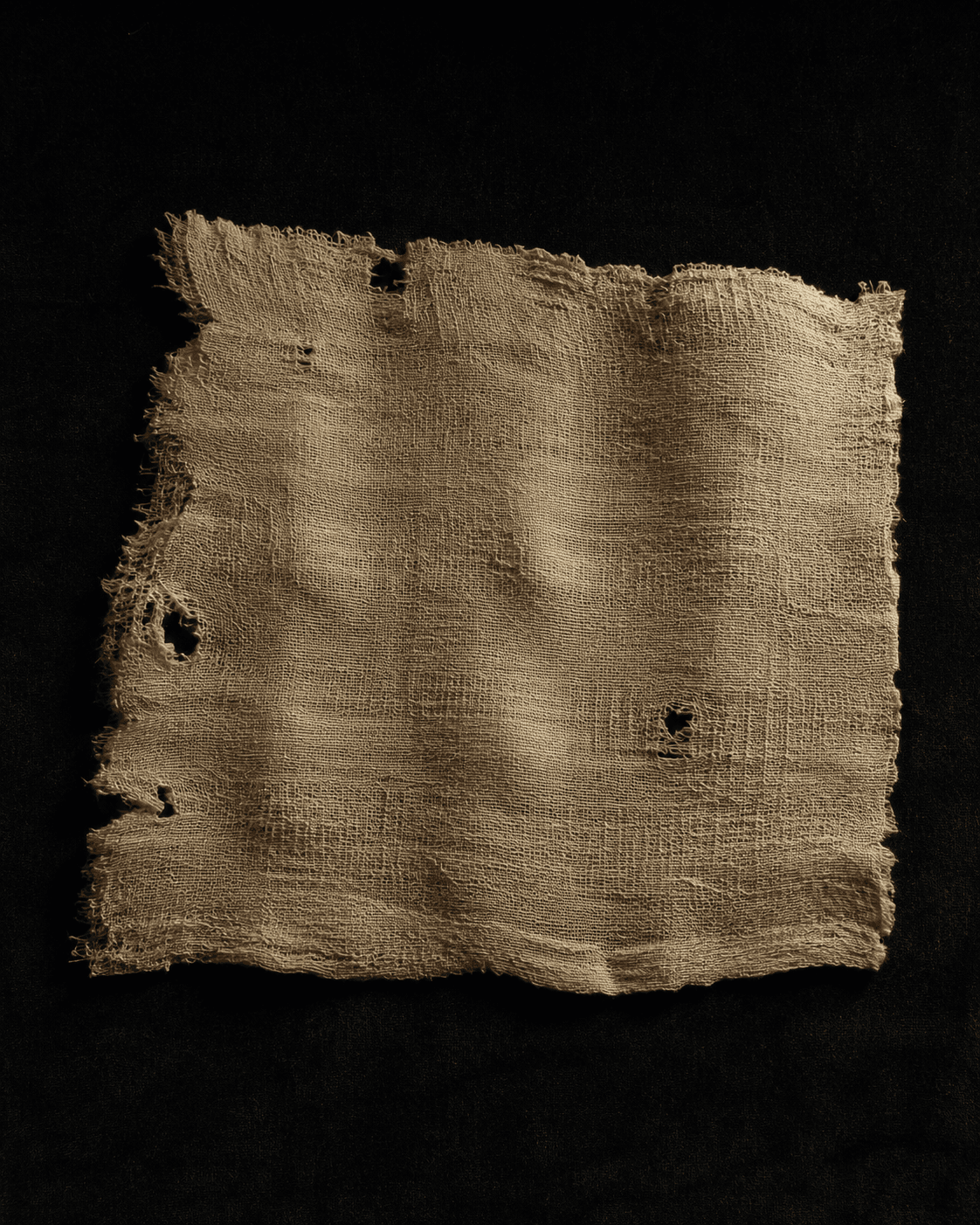
A great linen shirt is a deceptively difficult object. The cloth wants to behave differently from cotton at every stage of construction. Linen yarn has slubs — small thickened nodes from the natural variation in the fibre — and it does not feed smoothly through industrial sewing machines. The cloth shrinks more than cotton on first wash, between three and five percent, which means the pattern has to be cut larger and the man must understand that his new shirt will fit a little loose for its first three or four wears. A linen shirt finished with stiff fused interlinings — collar, cuff, placket — will look wrong within an hour: the fused panels remain rigid while the rest of the shirt collapses around them. The result is a garment that feels visibly pieced together rather than naturally resolved.
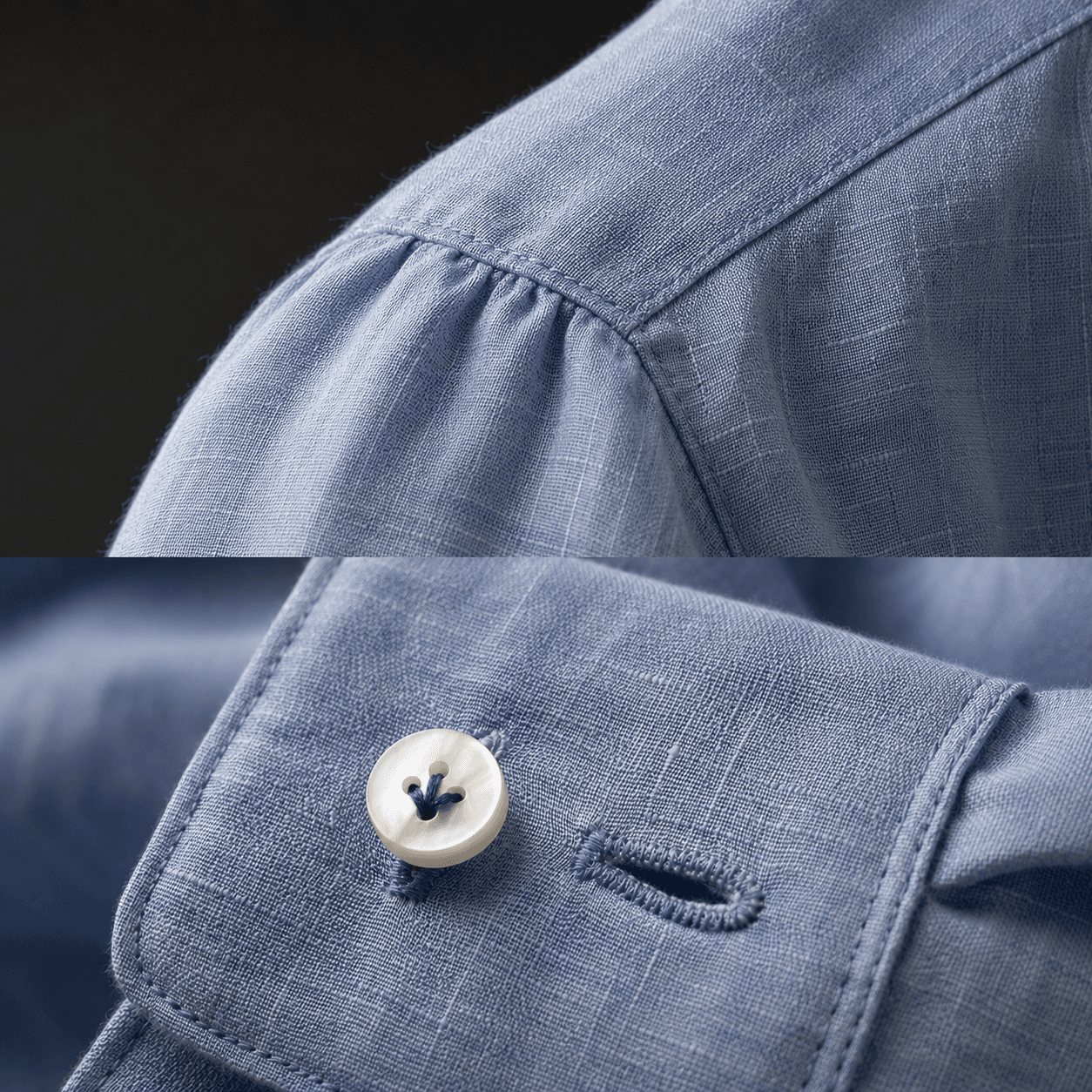
The Neapolitan shirtmakers solved most of this in the early twentieth century, and the methodology has not really been improved upon since. The collar is attached by hand, with a slightly relaxed tension that allows it to follow the curve of the neck rather than impose its own. Interlinings, where used at all, are soft fused or non-fused; many of the best summer shirts from houses such as D'Avino, Anna Matuozzo, or Finamore are made entirely without collar interlining, the cloth allowed to crumple gently over the tie. The sleeves are sewn into the body with the small gathered pleat at the shoulder that the Italians call spalla camicia — literally "shirt shoulder" — a technique that eases the cloth around the shoulder bone the way a shirt would, rather than stiffening it into the geometric perfection of a suit's sleevehead. The buttons are mother-of-pearl and they are sewn on with what is called a zampa di gallina, a "chicken's foot" — a cross-stitched X with a wrapped shank, so that the button stands a millimetre proud of the cloth, where it can move. The buttonholes are cut and hand-sewn after construction, not machined before.
Add it up and you are looking at twenty to twenty-five hours of handwork in a single shirt. It is, in real terms, more labour than goes into many ready-to-wear jackets. A bespoke linen shirt from a serious Neapolitan house today will cost between five hundred and eight hundred euros, and it will be worth every cent of it for one reason: it is the only piece of clothing you own that will be in genuine physical contact with your skin for ten or twelve hours a day. The compromise on shirt quality is, in my opinion, the single most common error in the wardrobe of an otherwise well-dressed man.
A practical note on cloth. The great linen shirting mills are Italian — Albini, Thomas Mason (now part of the Albini group), Carlo Riva, S.I.C. Tess — and the weight you want for a dress shirt sits between 110 and 160 grams a metre. Below that, the cloth becomes translucent in a way very few men can carry. Above 180 grams you are in summer-jacket territory and the shirt will not drape correctly. For any colour other than white or natural, specify Tinto Filo (yarn-dyed) rather than Tinto Pezza (piece-dyed) — the yarn-dye gives the heathered, slightly faded quality that good linen wants to have.
And — this is a hard rule — never starch a linen shirt. Starch, at the temperatures required to set linen, will accelerate the oxidation of the cellulose; your shirt will yellow and embrittle. Iron it damp, never dry. (I will return to the physics of this below.)
Retting: The Biology That Decides Everything
Before linen can be spun, the fibre has to be released from the woody stem of the flax plant. The connective tissue holding it in place is largely pectin, which is to say sugar-based glue. The pectin must be removed for the fibre to come free. The process of removing it is called retting — from the same root as "rotting" — and it is, with no exaggeration, the single most important variable in the quality of the finished cloth.
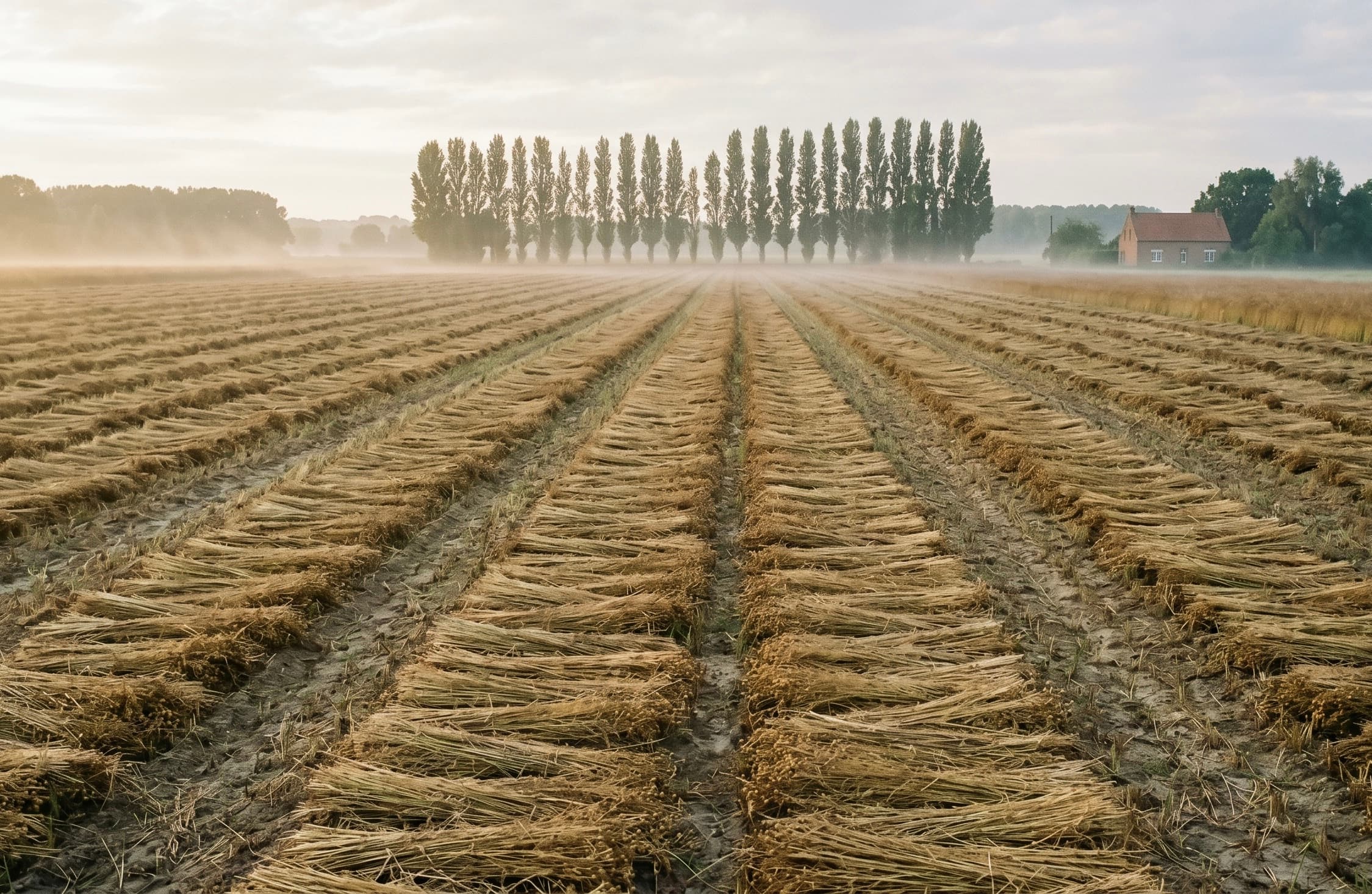
Two methods matter. The first is dew retting. The flax is pulled from the ground (not cut — the root contains valuable fibre) and laid out in long parallel rows on the same field in which it grew. For three to six weeks, the stems sit in the open. The fungi and bacteria native to the soil, activated by the cool damp nights and gentle days of Northern France, Flanders, and the Netherlands, gradually digest the pectin. The fibre is released slowly, with no chemical or mechanical violence, and emerges with up to twenty percent more tensile strength than fibre processed by any other method. It also acquires a subtle, irregular colouration — a "field signature" — that no laboratory process can replicate.
Around eighty percent of the world's apparel-grade flax is grown in a narrow corridor running from Caen up through Lille and across into West Flanders. This is not a coincidence. The microclimate of this stretch of Atlantic coast — cool nights, mild days, regular morning dew — is essentially the only place on earth where dew retting works reliably at industrial scale. (The flax requires no irrigation; the crop is genuinely carbon-negative at the field stage, reportedly preventing some 342,000 tons of CO₂ annually across the European industry.) China grows large quantities of flax, but most of it is water-retted; the Egyptians grow some of the finest fibre in the world but in nothing like the same volume. When a fabric is marked "Belgian linen" or "French linen" or carries the Masters of Linen / European Flax certification, what you are actually being told is that the fibre was dew-retted in this corridor — and that is, more than any other single fact, what justifies the premium.
The second method is water retting. The flax stems are submerged in tanks or — historically — in rivers and ponds, and the pectin is broken down by anaerobic bacterial fermentation, principally by Clostridium species. The result is faster, more uniform, and produces a paler, sometimes glossy fibre. It is also somewhat weaker than dew-retted flax, and the wastewater is genuinely difficult to manage. Most apparel-grade water retting has now been moved indoors to controlled tanks, but the quality penalty remains. The very finest "considered-grade" fibre — the top thirty percent of European flax, which is what the best mills want — is almost exclusively dew-retted.
What this means for the consumer: when a salesperson tells you their linen is "the finest in the world," ask where the flax was retted. The answer should be a region, not a country. If they cannot name the region, you have your answer.
Khaki, Empire, and the Strange Itinerary of the Safari Jacket
A piece of cultural history that is almost never told correctly.
In 1846, a British officer named Sir Harry Lumsden, raising an irregular cavalry corps in the Punjab, dyed the white uniforms of his men with tea, coffee, and local mud, to make them less visible against the dust of the North-West Frontier. The Hindi-Urdu word for that dust — khak — became khaki. By the Second Boer War of 1899 the British Army had abandoned its red coats almost entirely, and the practical multi-pocketed bush jacket — cut in linen, linen-cotton, or cotton drill for the tropical heat, with bellows pockets for ammunition and a half-belt at the back for ventilation — had become the standard tropical uniform of empire.
After 1947, something quietly extraordinary happened. In India, the safari jacket — the literal uniform of the colonial occupier — was picked up and reworked by the rising Indian middle class as the standard dress of the modern, independent man. The textile historian Mayank Mansingh Kaul has written movingly about his own grandfather: a 1940s freedom fighter who changed his Anglicised name Lytton back to the Indian Lalit, refused the three-piece woollen suit he had worn as a younger barrister, and dressed for the rest of his life in short-sleeved bush jackets and matching trousers of fine linen. By the 1970s and 80s, a good bespoke safari suit in Delhi or Bombay cost around forty rupees a metre of cloth plus fifty rupees of handwork — a serious investment — and it had become a kind of postcolonial uniform: practical, respectable, distinctly non-Western in its rejection of the wool suit, but still bespoke and still elegant.
It is one of the few cases in clothing history where a garment crossed the line from oppressor's uniform to liberator's uniform without changing its cut. The linen was, in both cases, the same.
Agnelli, Rubinacci, and the Cult of *Sprezzatura*
The modern bespoke language around linen is essentially Neapolitan, and within that, essentially the language invented at one address: Via Filangieri 26, the original house of Gennaro Rubinacci, opened as London House in 1932.
Rubinacci's intuition — and it is the intuition that has defined Italian tailoring for almost a century — was that the heavy, structured English jacket, designed for the cool damp of Mayfair, was simply the wrong garment for the climate of Southern Italy. He stripped out the canvas, softened the shoulder, lightened the lining (often eliminating it altogether on summer jackets), and rebuilt the pattern around the body's actual movement rather than around an idealised silhouette. The Rubinacci jacket — famously claimed to fold eight times and fit inside a small suitcase without damage — is essentially a shirt with the structure of a jacket, and it was developed first and most extensively in linen.
The story most often told about Rubinacci's clientele in those years involves a Neapolitan count who came in every May and ordered twelve linen suits at once. He wore them like shirts: a different one each day, sent down to be washed by his valet each night, ironed back into shape with a heavy iron and a damp cloth, and at the end of the summer the entire wardrobe was discarded. Twelve fully handmade suits, gone. It is a story I have heard told by three different sources in three slightly different versions, which means it is at minimum half true, and it captures something essential about the Italian relationship with linen: the cloth is too alive to be precious. It is meant to be used.
This is the deep meaning of the word sprezzatura, which Baldassare Castiglione coined in his 1528 Il Cortegiano — The Book of the Courtier — and which has been mistranslated as "studied carelessness" for five hundred years. The actual sense is closer to "the art of making the difficult appear effortless." Gianni Agnelli — Fiat chairman, inveterate dresser, possibly the most photographed Italian man of the twentieth century — was its great late exemplar. He wore his wristwatch over his shirt cuff, claiming the cuff was in the way. He tied his ties so that the back blade hung longer than the front. He wore brown hiking boots with grey worsted suits to board meetings. The point of every one of these gestures was not eccentricity but signal: he was so far above the rules of dress that the rules had begun to bend around him.
A linen suit, wrinkled by the end of lunch, performs the same gesture more quietly. The wrinkles say: I am not the kind of man who worries about wrinkles. Sprezzatura is, in the end, the visible refusal to seem to be trying. Linen is its native fabric.
Simon Crompton has written that the test of a man's understanding of Italian tailoring is whether he can revel in the wrinkles of his own linen jacket — whether he reads them as flaw or as autograph. I would put it more strongly: the man who irons his linen jacket flat every morning has not understood the cloth, and very probably has not understood the suit.
The Hostility of Linen to the Tailor's Hand
It is sometimes assumed that, because linen drapes easily and tailors sprezzatura into existence, it must be a forgiving cloth to cut. The opposite is true. Linen is, in my experience, the single most hostile fabric a tailor will work with.
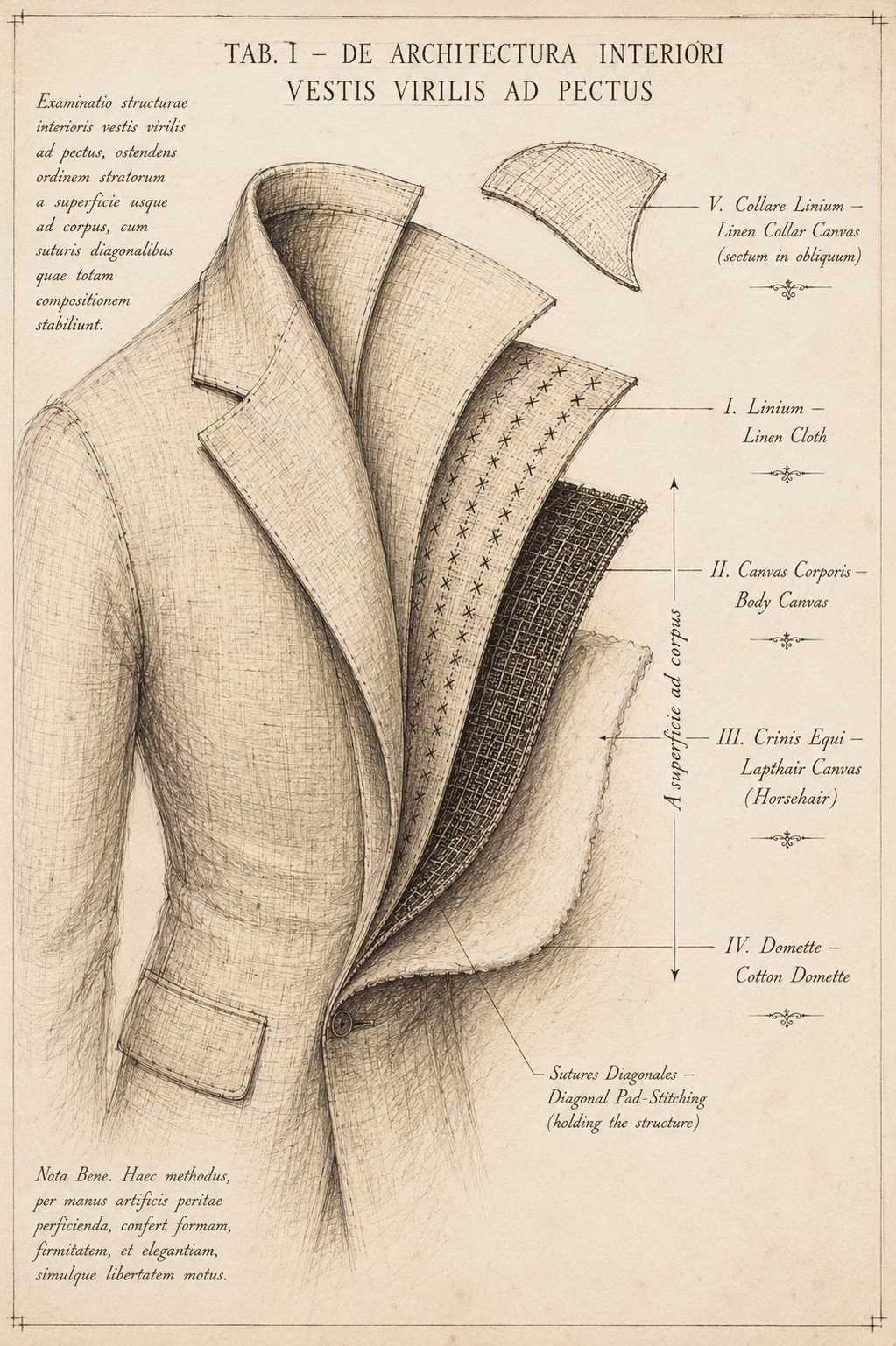
The first problem is structural. A traditional Savile Row jacket is built around a complex internal architecture of canvas — a body canvas of camel or goat hair, a lapthair of stiff horsehair across the chest to maintain shape, a layer of cotton domette between the lapthair and the outer cloth to prevent the horsehair from breaking through, a separate linen collar canvas cut on the bias to hug the back of the neck, Silesia cotton in the pockets — plus shoulder wadding to soften the line. (Anderson & Sheppard, on Old Burlington Street, build their celebrated soft "drape" cut by stripping much of this back and basting the sleeves in with loose cotton thread. Even the softest English cut still uses canvas.)
The problem is that all of this internal architecture exists to give wool jackets their three-dimensional shape — and wool is happy to be coerced. Linen is not. A fully canvassed linen jacket has the breathability of a wool jacket — which is to say, not very much — and defeats the entire reason for wearing linen in the first place. But an unconstructed linen jacket, sewn on the cheap, will lose its shape within three or four wears and look, frankly, terrible.
The Neapolitan solution — and this is the technical innovation that has made Naples the world capital of linen tailoring — is to draft the canvas pattern from scratch for every client, every time, rather than using a stock canvas modified for fit. The structure is radically reduced: minimal chest piece, no horsehair, no shoulder wadding (or the tiny manica camicia gather that mimics shoulder structure without adding any cloth weight). The shape of the jacket is then engineered into the pattern itself, in the form of extra cloth in the chest, eased into the armhole by hand, so that the jacket holds its silhouette through cut rather than through internal scaffolding. It is enormously more difficult to do well. The pay-off is a jacket that breathes like a shirt and drapes like a curtain.
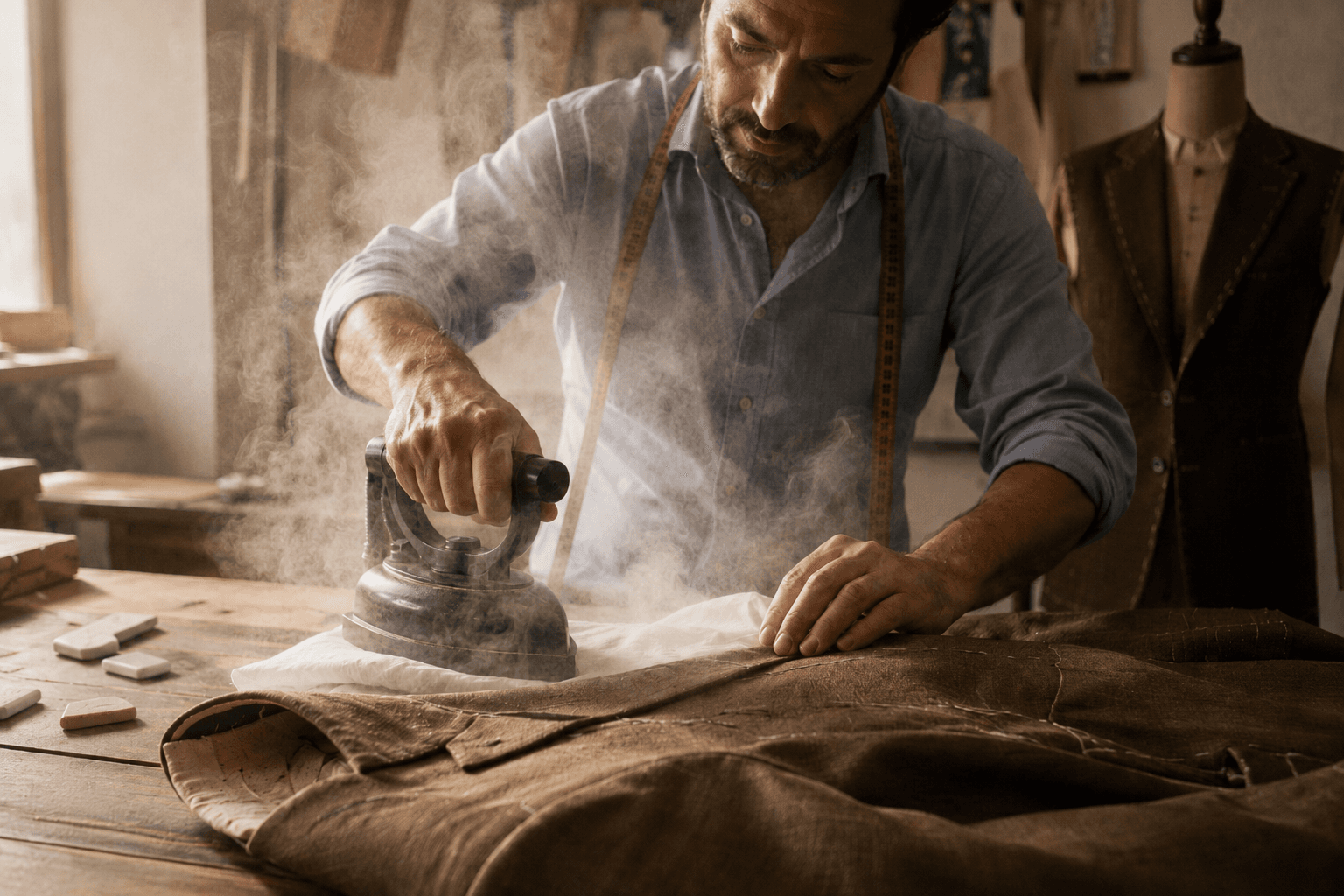
The second problem is pressing. Wool can be shaped by an iron because steam and heat break the disulfide bonds within the keratin protein; the fibre is forced into a new position and the bonds re-form on cooling. Linen has no disulfide bonds. The only thing holding its shape is the same hydrogen-bond network that produces the wrinkle. To shape linen with an iron, the tailor must first dissolve those bonds — which requires considerable saturation with water (a domestic steam setting is not nearly enough) — and then apply pressure at temperatures above 200°C (around 400°F), with a cotton press cloth to prevent surface scorching and glazing.
And — this is critical, and counter-intuitive to almost everyone who has ever ironed a shirt — the iron must not slide. The AATCC has tested this: sliding a hot iron across damp linen distorts the weave permanently into a trapezoidal warp and increases dry-state pilling by forty-seven percent. The correct technique is to lift the iron, place it down with downward pressure, hold it, lift, move, place again. It is closer to stamping than to ironing.
When this is done properly — with no starch (which yellows the cloth above 180°C), with proper saturation, with vertical pressure only — the new hydrogen-bond network sets into a three-dimensional shape that will hold for the life of the garment. This is how the lapel rolls. This is how the trouser leg gets its taper. It is also why bespoke linen, properly pressed, looks different from any factory linen you have ever seen.
The Mills, Briefly
The trade is, in practical terms, dominated by two schools.
The Irish school — Spence Bryson is the great house, with W. Bill and Harrison's Mersolair also significant — produces heavy linen, typically between 10 and 13 oz a metre (300 to 400 grams), tightly woven in plain weave, with relatively coarse yarn that keeps the slubs visible. The Spence Bryson Tropical book at 370g is the workhorse, somewhat dense and dressy. The Tyrone at 380g uses heavier yarn in a more open weave and looks deliberately rustic — there is no other linen on the market that wears with quite this kind of textured authority. The rare Cloughy at 270g is sateen-woven and shrink-treated for a smoother, almost silken hand. Irish linens wear like armour. They wrinkle in large, sharp creases at the elbow and knee — not in small surface ripples — and they hold a trouser crease for the entire day. They are the right choice for the man who wants a linen suit that reads as a suit.
The Italian school — Solbiati (now owned by Loro Piana) is the giant; Caccioppoli runs a close second — favours lighter cloth in the 7 to 10 oz range, finer yarns, more sophisticated dye work. Solbiati's Art du Lin at 330–500g, woven from double-twisted yarn, has redefined what a heavy Italian linen can be. The lighter Street Lino and TimeOff books at 195 to 260g are the cloth of summer holidays on Capri. Italian linens wrinkle in a hundred small ripples rather than in three deep folds, and the result is a kind of fluid, almost liquid drape that the Irish cloths cannot replicate. They are the right choice for the man who wants a linen suit that reads as a holiday.
The French — principally Maison Hellard, whose Carnet de Voyage twill at 410g is one of the great unsung cloths of the trade — split the difference, with rugged surface texture and serious weight.
There is, finally, the matter of dye. Three methods are worth knowing. Tinto Pezza is piece-dyed: the cloth is woven and then dyed as a finished bolt, producing very saturated, uniform colour. Tinto Filo is yarn-dyed: the yarn is dyed before weaving, and the most common variant uses a white warp with a coloured weft, producing a chambray-like depth that no piece-dye can imitate. Delavé is the most sophisticated: the yarn is washed and partially stripped before weaving, producing the slightly faded, atmospheric quality that gives the best Italian summer cloths their distinctive character. Delavé linen ages better than any other; it is the cloth I would recommend to anyone buying their first linen suit, on the grounds that it forgives every mistake the wearer will make in his first decade with the fabric.
The Heresies — What I Would Actually Tell You to Do
A short, opinionated list, which I offer as the conclusion of everything above.
On colour. A navy linen suit is a mistake. The colour reads as serious and the wrinkles read as careless, and the combination looks like an exhausted office suit at the end of a transatlantic flight. Tobacco — somewhere between deep brown and faded olive, the colour of a good Havana or a worn leather chair — is the apex linen suit colour, and works on more men than any other shade I know. The trick is that the right tobacco sits between brown and dark green, not between brown and orange; a too-orange Irish linen in a hard English cut will read as cheap, while a deep, slightly grey-green Italian Delavé in a soft Neapolitan cut will look like quiet money. Olive, biscuit, and a properly dusty stone are close behind. White and cream are summer-only and demand both a slim man and a confident manner; both will defeat anyone unsure of either.
On mixing cloths. Do not mix a linen jacket with linen trousers of a different colour. Two cloths of identical texture and sheen but different hue will read as a mistake rather than as a choice. If you want a linen jacket and a wool trouser, or vice versa, do that — the textural contrast is what makes the outfit. (For sport jackets, a wool–silk–linen blend cloth from Caccioppoli or Loro Piana is in my view superior to pure linen: the wool provides structural memory, the silk adds lustre, and the linen provides the slubs and the breathability. For trousers, never use this blend — it lacks the weight to hold a crease, and it abrades at the knee far faster than pure cloth. Use heavy Irish linen, or switch to a Fresco high-twist worsted.)
On trousers. Always specify turn-ups — "cuffs," to the Americans — on linen trousers, between 1.5 and 2 inches deep. The turn-up was popularised by Edward VII in the 1890s, apparently to keep his trouser hems out of the London mud, and has survived as a cuff because the additional weight at the hem improves drape and helps the trouser fall correctly over the shoe. Linen, being light, particularly needs this ballast. Without a turn-up, your linen trousers will flap.
On laundering. Wash; do not dry-clean. The solvents used in dry cleaning strip the natural waxes from the linen and accelerate the embrittlement of the cellulose. A cool wash, line dry, iron damp at high temperature — and never starch.
On ageing. A great linen suit becomes itself slowly. The first wear is stiff. By the tenth wear, the residual pectin in the fibre has broken down further; the cloth has softened and developed real drape. By the fiftieth wear, you will own a garment that fits you and only you, in the way that very few clothes in a modern wardrobe ever do. Cotton wears thin and dies. Wool pills and dies. Linen, properly made, gets better for the entire decade you own it. It is the only fabric in your wardrobe that is on a positive trajectory.
Coda
The reason linen survives — the reason that, in an age of stretch wool and four-way performance fabrics and engineered breathability, a serious bespoke client will still spend four thousand euros on a hand-canvassed Neapolitan linen jacket that he knows will be wrinkled by the time the bill arrives at lunch — is that the cloth contains, in a very physical sense, the trace of how it was made. The dew that retted the fibre in a field outside Lille. The bacteria that ate the pectin. The slubs in the yarn from the slight irregularity of the stalk. The press cloth and the iron and the hours of the tailor. The shape of your own body, recorded in the wrinkles around your elbow.
It is the most honest fabric in the wardrobe. It refuses to pretend. It cannot be faked, performance-engineered, made wrinkle-free, or industrially short-cut without ceasing to be itself. To wear it well — to wear it without fussing — is to accept a certain proposition: that things that record their history are more interesting than things that pretend not to have one.
The wrinkle is the autograph. The cloth is the page. The man, if he understands any of this, is the only thing in the room that knows it.
Atelier Saison
Bring linen questions to the fitting table
A strong linen wardrobe is built on decisions, not slogans: fibre origin, weight, cut architecture, and how you plan to live in the cloth.
亚麻真正的门槛不在“好看”,而在理解:理解它如何形成褶皱、如何被裁缝驯服、以及怎样在日常中被穿成你自己的样子。